
Getting out of bed first thing in the morning can sometimes feel stiff, especially after staying in one position for several hours.
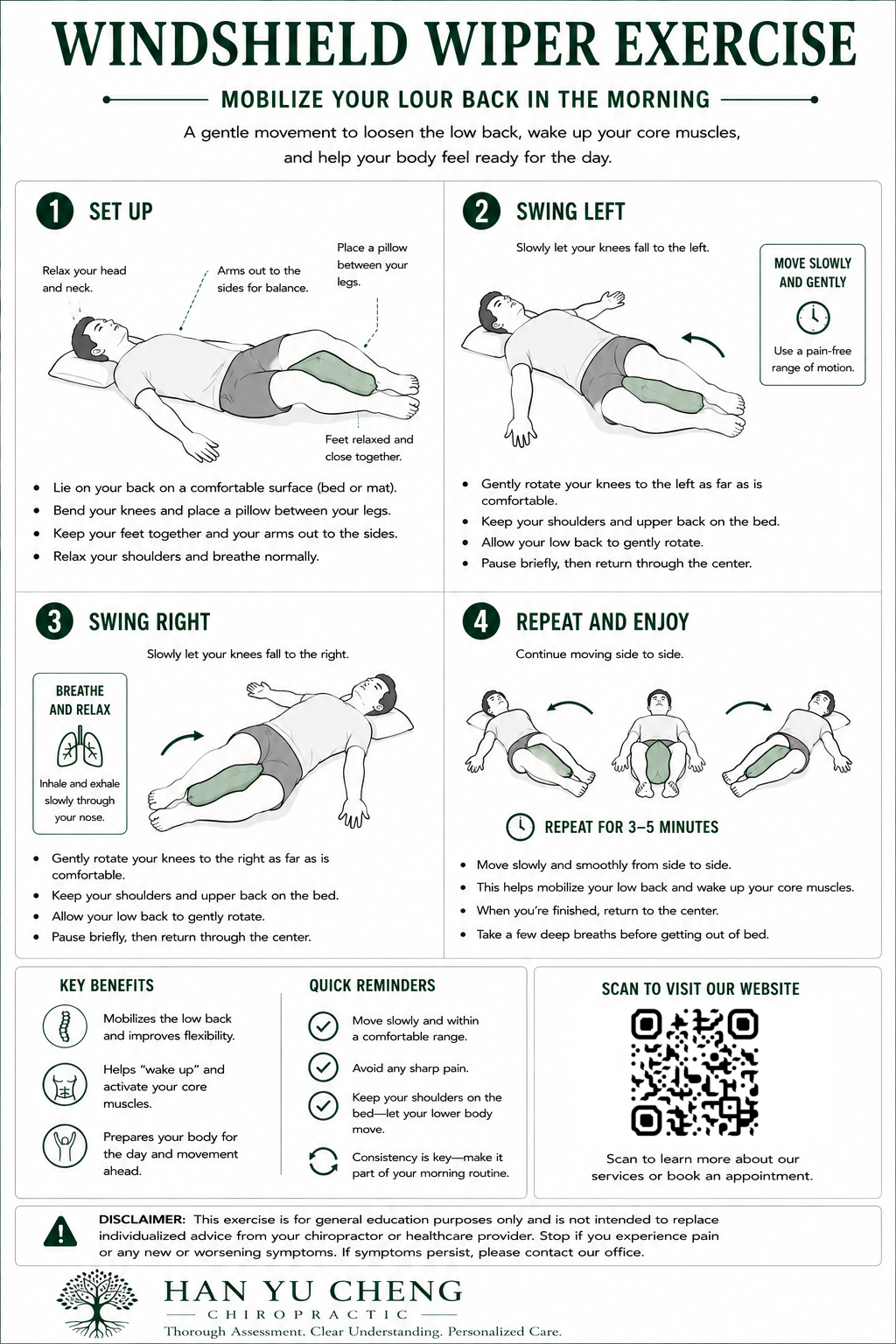
The windshield wiper exercise is a simple, low-intensity movement you can perform while still in bed. It uses gentle side-to-side movement of the legs to introduce movement through the low back while encouraging you to feel your abdominal muscles engage and control the motion.
The goal is not to stretch as far as possible. Instead, focus on slow, controlled movement and awareness of your abdominal muscles.
How to Perform the Exercise
1. Start on Your Back
Lie comfortably on your back.
Bend both knees.
Place a pillow between your knees.
Keep your feet together.
Let your arms rest comfortably at your sides.
Take a few relaxed breaths before you begin.
2. Slowly Move Your Knees to One Side
Slowly allow both knees to move toward one side.
Keep your shoulders and upper back relaxed against the bed.
Move only through a comfortable range.
As your legs move, pay attention to your abdominal muscles.
You should feel your core gently engage to help control the movement.
3. Move Back Through Centre and Go to the Other Side
Bring your knees back toward the middle.
Slowly allow them to move toward the opposite side.
Continue moving smoothly from left to right.
Think of your legs acting like windshield wipers while your abdominal muscles help control the movement.
You do not need to force your knees toward the mattress.
4. Continue for 3–5 Minutes
Continue moving slowly from side to side for approximately 3–5 minutes.
Focus on:
Smooth movement
Relaxed breathing
Feeling your abdominal muscles engage
Staying within a comfortable range
The movement should feel controlled rather than strenuous.
Why Do This in the Morning?
After several hours of sleep, your body has spent a long period in a relatively stationary position. A few minutes of gentle movement can be a simple way to introduce motion before getting up and starting your day.
This exercise emphasizes movement of the low back combined with abdominal control.
Rather than immediately asking your body to move from lying down to standing and walking, this provides a gradual transition from rest to movement.
What Should You Feel?
The sensation should be relatively gentle.
You may notice:
Movement through the low back and pelvis
A mild rotation as the knees move from side to side
Your abdominal muscles working to control the movement
A gradual feeling of being more comfortable with movement
You do not need to feel a strong stretch.
The most important cue is to notice the abdominal muscles working as the legs move back and forth.
Quality Over Range
You do not need to move your knees all the way to the bed.
A smaller, controlled movement is perfectly acceptable.
As you become more comfortable, you can gradually allow more movement, provided it remains comfortable and controlled.
Think:
Slow → Controlled → Breathe → Feel the Core
rather than:
Fast → Bigger → Harder
Make It Part of Your Morning Routine
Try performing the windshield wiper exercise before getting out of bed.
Spend 3–5 minutes moving comfortably from side to side, then return your knees to centre, take a few relaxed breaths, and get up when you are ready.
It can be a simple way to start your morning with some controlled movement before moving into the rest of your day.
Key Takeaway
The windshield wiper exercise is less about how far your knees travel and more about how well you control the movement.
Use the movement to gently mobilize your low back while paying attention to your abdominal muscles as they engage to control your legs.
Disclaimer
This exercise is provided for general educational purposes and is not intended to replace an individualized assessment or treatment plan. Stay within a comfortable range and stop if you experience sharp, significant, or worsening pain. If you are unsure whether this exercise is appropriate for you, speak with your regulated health professional.
Han Yu Cheng Chiropractic
Thorough Assessment. Clear Understanding. Personalized Care.
